Build the SaaS product your customers need
I build SaaS applications with tenant boundaries, permissions, billing, and the operational tools you need after launch. We start with one customer workflow and grow from there.
Focused engagements from $500. Larger work is scoped in milestones.
Relevant work
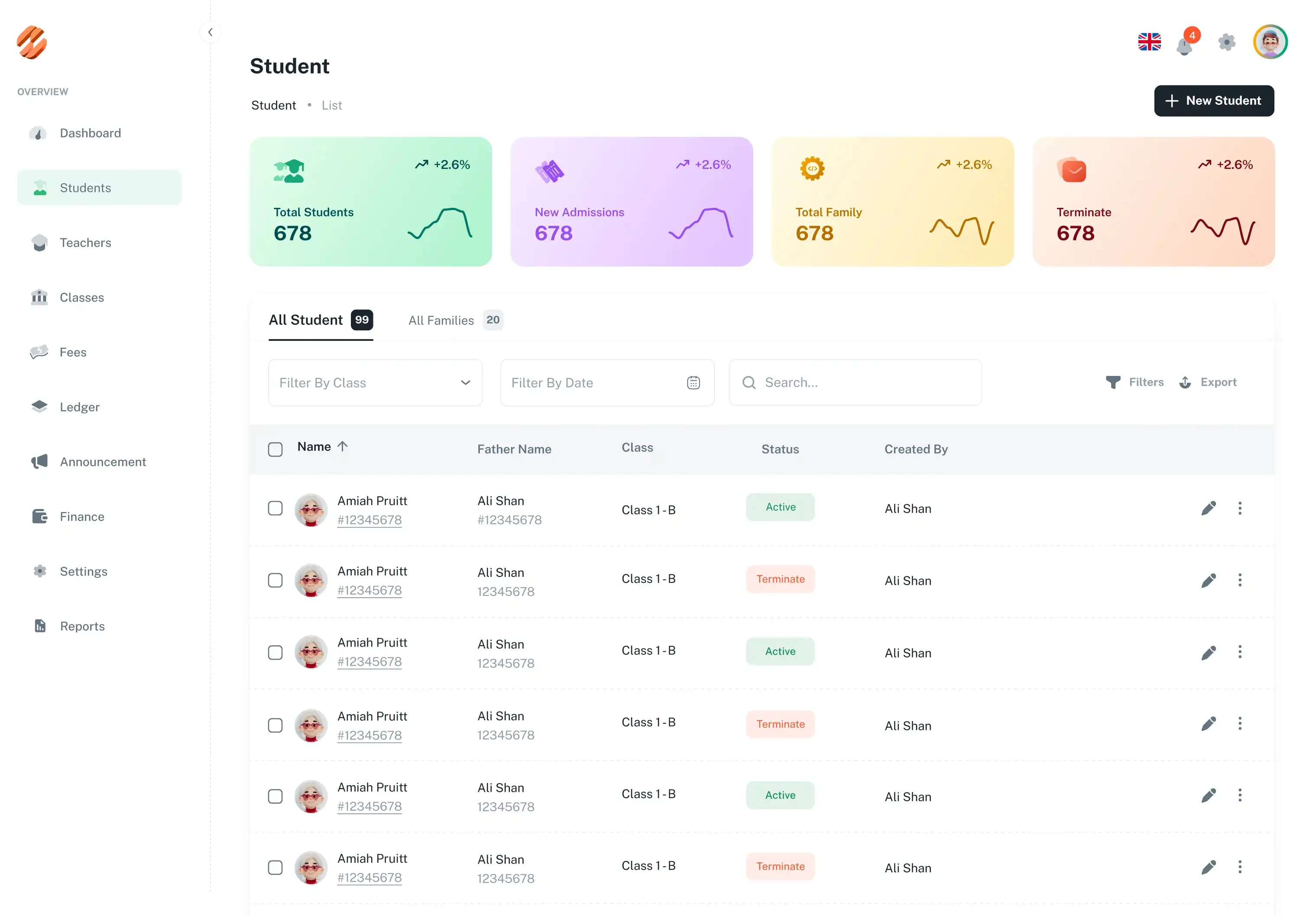
A multi-tenant school management SaaS for the Pakistani market, covering students, staff, fees, and parent communication across a Next.js web app, a white-label Expo mobile app, and an Electron WhatsApp sender.
Core front-end engineer (multi-developer team)
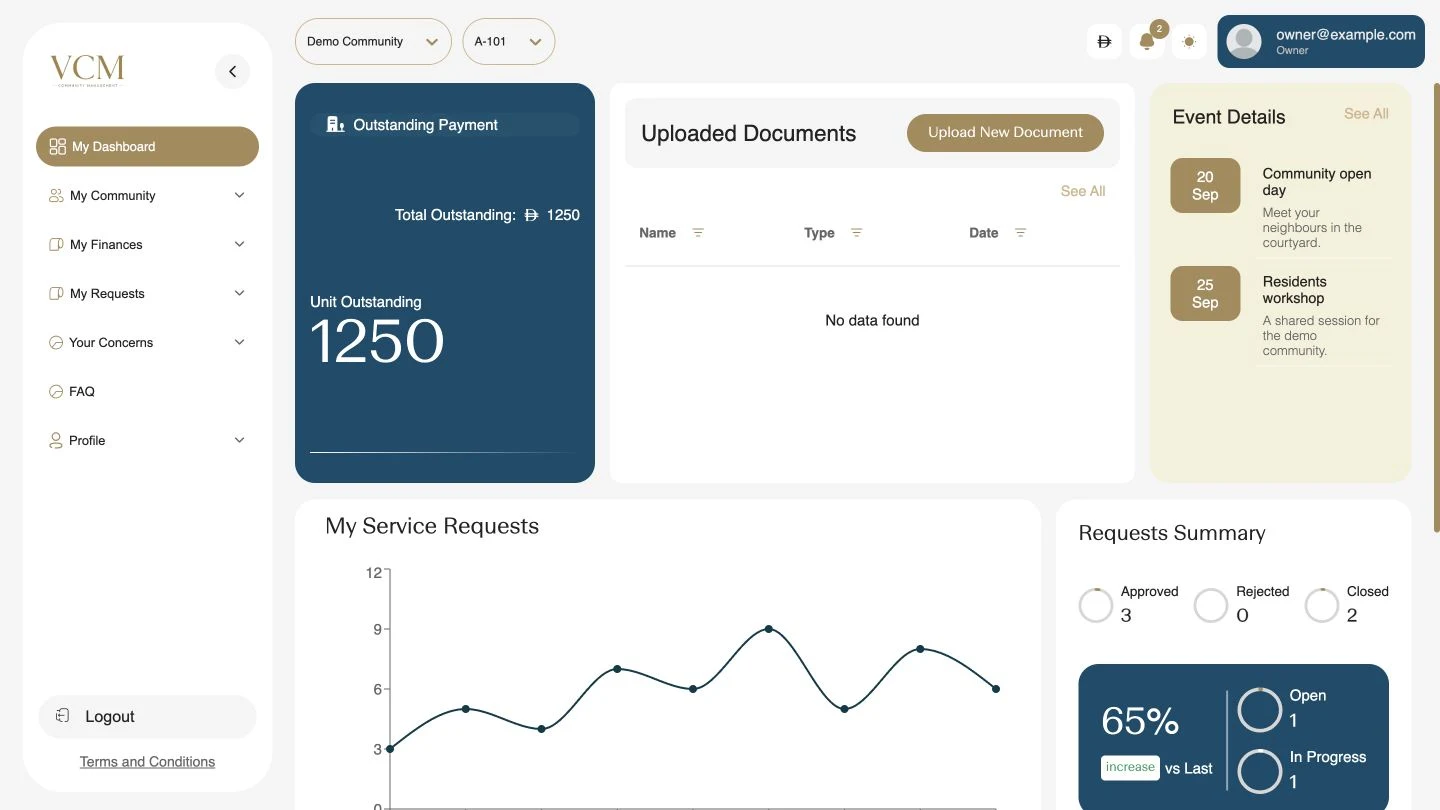
Read the case studyThe front end for a property and community management platform that serves two audiences from one codebase: an admin operations workspace and a resident self-service portal, built on shared, permission-aware primitives.
Lead front-end engineer
Read the case studyWhere I can help
- You are turning a validated service or manual workflow into a SaaS product.
- Your MVP needs a dependable multi-role foundation rather than disconnected demo screens.
- An existing SaaS application needs a new module, dashboard, or integration.
- You want a direct alternative to the overhead of a large SaaS development company.
What’s included
- MVP and milestone scoping tied to a customer workflow
- Tenant-aware application architecture
- Authentication, roles, and permission boundaries
- Subscription, payment, messaging, or automation integrations
- Admin tools for operating the product
- Usage, delivery, or business reporting where the product needs it
The admin side is part of the product
Early SaaS builds often focus on what the customer sees and leave product operations for later. Then the first account needs a correction, a manual retry, a role change, or an explanation of what happened. Without internal tools, every exception becomes a database task.
I plan customer workflows alongside the controls needed to support them. The exact tools depend on the product, but ownership, auditability, retries, account state, and useful reporting deserve attention before they become support debt.
Multi-tenant does not mean one standard architecture
Tenant separation can live in application rules, database policies, separate schemas, or separate infrastructure. The right choice depends on the sensitivity of the data, expected scale, reporting needs, and how much operational complexity the business can carry.
I make that tradeoff visible. A young product usually benefits from the simplest design that protects tenant data and leaves a credible route to change. Complexity added for an imagined enterprise future can slow the customer learning that the MVP exists to create.
From MVP to a product people can keep using
A SaaS MVP should prove a paid workflow. That still requires deliberate handling of authentication, permissions, failures, and the data customers create. Disposable code is rarely cheaper when customer accounts are already inside it.
Small SaaS engagements can begin at $500 for a focused audit, repair, or product slice. New MVPs and substantial modules are divided into priced milestones after the project brief. You will know what each milestone proves before development starts.
How we’ll work
Choose the customer action
We define the repeated job the customer is paying to complete and the smallest product that can perform it reliably.
Model the operating rules
Tenants, roles, status changes, billing rules, and admin exceptions are made explicit before they spread through the code.
Ship a usable slice
The first milestone is a complete workflow that can be reviewed with real inputs, rather than a wide set of unfinished screens.
Learn from use
The next milestone follows actual product feedback, support needs, and usage instead of guesses made at the start.
Before we start
What is included in SaaS application development?
The scope may include product planning, tenant architecture, authentication, roles, dashboards, APIs, integrations, subscription states, admin tools, reporting, testing, and deployment.
Can you build a SaaS MVP?
Yes, when the first customer workflow and success condition are clear enough to define a useful milestone. If they are not clear yet, the first engagement can focus on scope.
Are you a SaaS development company?
No. I am an independent full-stack developer. That gives you direct access to the person doing the work. If a project needs a specialist outside my role, I say so before the work is agreed.
Can you improve an existing SaaS product?
Yes. I can work on a defined module, repair a difficult workflow, add operational tooling, or help make an existing React, Next.js, or Node.js application easier to extend.